

.png)
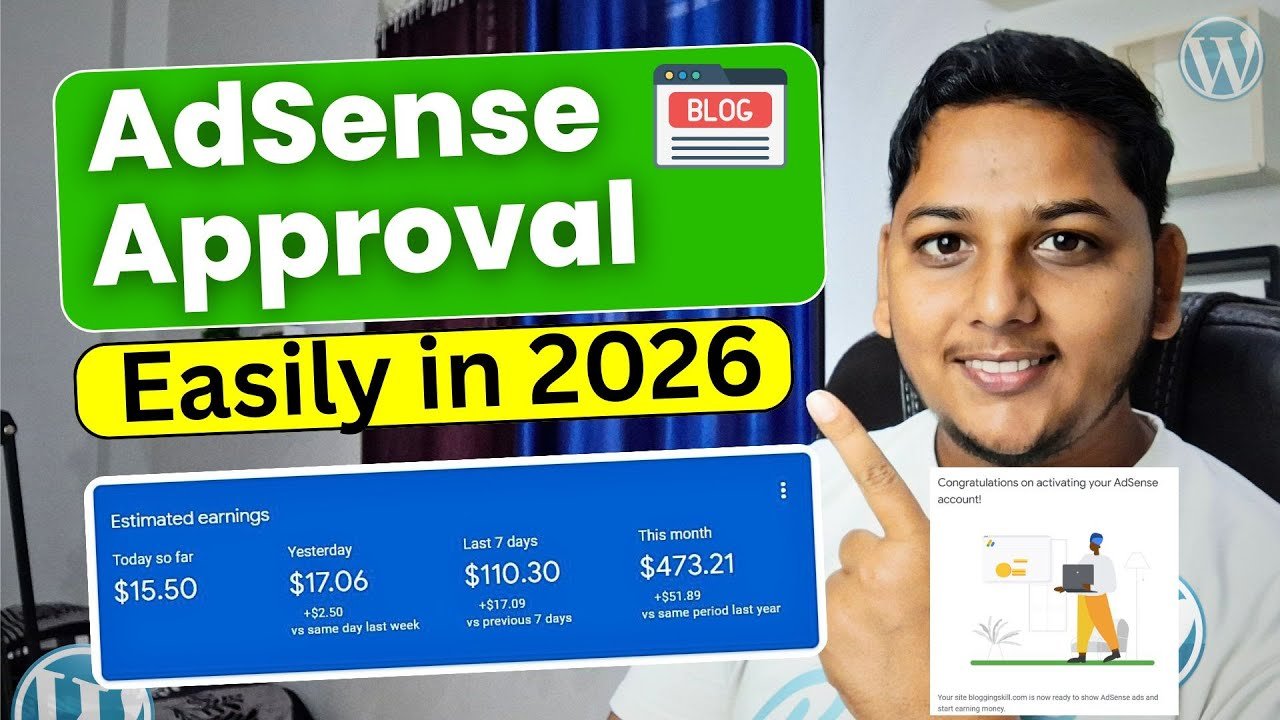
Securing Google AdSense approval in 2026 demands a refined, strategic, and high-quality approach. With Google’s policies evolving and competition increasing, publishers must adopt a more professional and structured method to ensure approval. In this comprehensive guide, we share proven, practical, and updated AdSense approval strategies that significantly increase your chances of being accepted on the first attempt.
Understanding Google AdSense Requirements in 2026
Before applying, you must fully understand Google’s strict standards for website eligibility. Google now prioritizes websites that demonstrate authentic expertise, secure user experiences, and original value. Any violation of quality guidelines results in immediate rejection.
Key requirements include:
•High-quality, original content written for humans, not algorithms.
•Clearly defined website purpose and trustworthy information structure.
•Mobile-friendly, fast-loading design compliant with Core Web Vitals.
•Robust privacy and security measures, especially HTTPS and cookie transparency.
•Comprehensive legal pages including Privacy Policy, Terms & Conditions, and Disclaimer.
1. Build a Strong Foundation With a Professional Website Structure
Google now evaluates your site’s architecture as part of the approval process. A clean, well-designed structure shows professionalism and enhances trust.
Essential structural components:
•Homepage explaining your site’s mission and value.
•Blog section containing useful, long-form posts.
•Contact page featuring email, form, or social profiles.
•Legal pages updated to meet 2026 policy requirements.
•Navigation menu that is simple, visible, and mobile-responsive.
A website filled with broken menus, empty pages, or placeholder text is almost always rejected. We ensure every page is meaningful, functional, and relevant.
2. Publish High-Quality, Long-Form Content (Minimum 1,200 Words per Post)
Google now emphasises depth, originality, and user value. Short, low-value, or AI-generated content without human refinement often triggers disapproval.
Content requirements for 2026 include:
•Minimum 1,200–1,500 words per article.
•Use of headings, lists, tables, and images for readability.
•Articles covering topics with expert insight and actionable tips.
•No duplicate content, spammy keywords, or rewritten posts.
•Niche-specific consistency, meaning your website should focus on one core topic.
Publish at least 15–25 high-quality articles before applying.
3. Choose a Clear, Profitable, and Focused Niche
A broad niche confuses both users and Google. The best strategy is to select a single niche and publish content consistently within it.
High-approval niches include:
•Technology tutorials
•Educational guides
•Travel and lifestyle
•Home improvement
•Productivity and business skills
Avoid high-risk niches such as:
•Adult topics
•Gambling
•Medical advice
•Copyrighted content
•Hacking or illegal activities
Google wants reliable, safe, and informational websites that align with their advertising ecosystem.
4. Improve Website Speed and Technical Performance
Website performance plays a major role in AdSense eligibility. Slow, unresponsive sites result in poor user experience and higher rejection rates.
Key areas to optimise:
•Core Web Vitals: LCP, FID, CLS
•Use lightweight themes and reduce heavy scripts
•Compress images using WebP format
•Enable caching and CDN support
•Ensure mobile usability is 100% flawless
A fast and efficient site signals to Google that you are serious and professional.
5. Ensure Your Website Has All Required Legal Pages
In 2026, Google has strengthened its policies around site transparency. Missing legal pages is one of the top reasons for rejection.
Mandatory pages include:
•Privacy Policy
•Terms & Conditions
•Disclaimer
•Cookie Policy (for EU-compliant sites)
These pages show you respect user data and follow global privacy standards. They should be accessible via your main menu or footer.
6. Boost Your Website’s Trust and Authority
Google favours sites that demonstrate credibility. Even new websites can build trust quickly by following key authority-building practices.
Add trust-enhancing elements such as:
•Author bio with verified expertise
•About Us page showing real information
•Social media links
•Professional branding (logo + consistent design)
•Relevant external and internal links
The more authentic your site appears, the higher your approval chances.
7. Make Sure Your Domain Is Aged and Indexed
New domains can still get approved, but it is easier when:
•The domain is at least 30–60 days old
•All pages are properly indexed on Google
•No indexing errors appear in Search Console
•The site has zero spam or copyright issues
Submit your sitemap via Google Search Console early and ensure all URLs are crawlable.
8. Avoid Policy Violations That Lead to Immediate Rejection
Google AdSense has a zero-tolerance policy for violations. Any single breach can lead to disapproval.
Major violations include:
•Copyrighted images, text, or videos
•AI-generated content without human editing
•Thin content with no value
•Misleading links or ads
•Incomplete pages or broken links
•Excessive pop-ups or intrusive ads
•Plagiarised or rewritten content
Always manually review your site before applying.
9. Apply for AdSense Only When Your Website Is Fully Ready
Timing plays a critical role. Do not rush.
Your website should have:
•At least 15–25 long-form articles
•Fully built navigation and pages
•Fast loading times
•Professional design and branding
•No construction messages or empty categories
Once everything is clean, professional, and polished, proceed with submitting your application.
10. Maintain Consistency and Update Content Regularly
After applying, continue adding fresh content to show Google that your site is active and valuable.
Publish consistently:
•2–3 articles per week
•Update outdated posts
•Fix technical errors
•Improve SEO structure
•Add engaging media and interlinks
Consistency builds long-term authority and improves your approval prospects.
11. Common Reasons Why AdSense Rejects Websites in 2026
Understanding common rejection reasons helps you avoid mistakes:
•Insufficient content
•Low-quality or AI-generated articles
•Website lacks purpose
•Poor user experience
•Niche not allowed by AdSense
•Missing legal pages
•Plagiarism
•Not enough traffic or engagement
•Lack of trustworthiness
Solving these issues dramatically increases approval chances.
12. Final Checklist Before Applying in 2026
•✔ 25+ quality articles
•✔ Fully optimized speed
•✔ Mobile-friendly design
•✔ No copied content
•✔ All legal pages added
•✔ Clear niche focus
•✔ Search Console + Analytics installed
•✔ Pages indexed on Google
•✔ Professional layout and branding
When everything is ready, your chances of approval become extremely high.
Conclusion
Achieving Google AdSense approval in 2026 requires professional content, clean site structure, user trust, and strict adherence to Google’s updated policies. By following the strategies outlined in this guide, any site can significantly increase its chances of being approved on the first attempt. Focus on building value, providing high-quality information, and maintaining transparency across your platform.

10/12/2025 10:04 775